Hard water carries dissolved calcium and magnesium. We measure it in grains per gallon. Anything over about 10 grains counts as very hard.
Most of the East Valley runs 12 to 20 grains. That is some of the hardest city water in the country. It is why a plumber in Mesa fixes things a plumber in Seattle almost never sees.
It is safe to drink. The minerals are the same ones in a vitamin. What it does is cost you money slowly, in three specific places.
It cuts years off your water heater
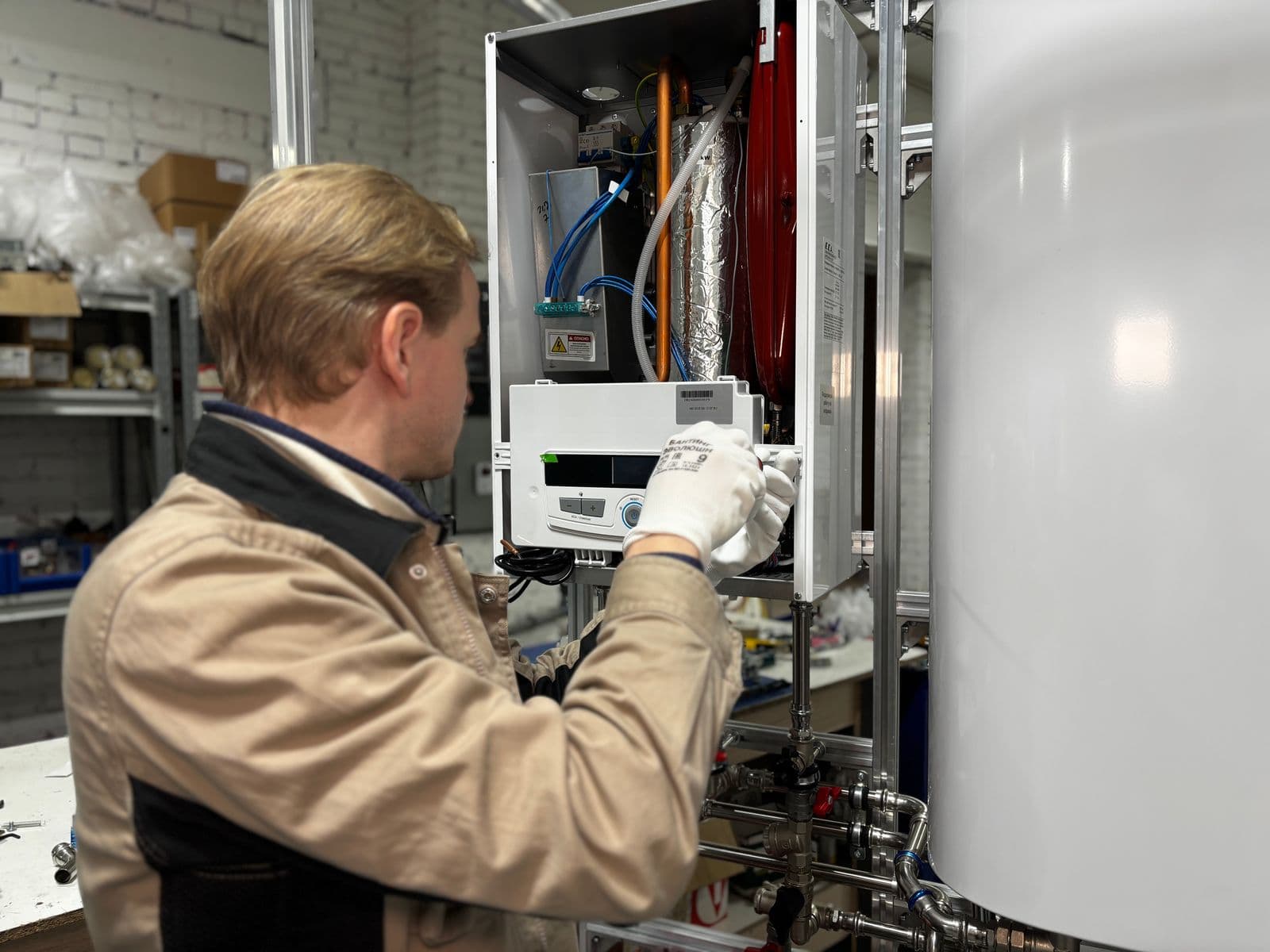
This is where hard water costs the most. When water is heated, dissolved mineral drops out of it and settles as scale on the bottom of the tank and on the heating element.
That layer acts as insulation between the burner and the water. The heater runs longer to reach the same temperature, so you pay more for gas or power, and the steel at the bottom of the tank gets hotter than it was built to run. Metal fatigues, and eventually the tank splits.
A tank water heater is rated for 10 to 12 years. In untreated Valley water we routinely replace them at 7 or 8. The popping and rumbling people describe is water flashing to steam under the scale layer.
Two things extend it, and both are cheap next to a replacement:
- Flush the tank once a year. Hook a hose to the drain valve and run it until the water clears. It pushes the loose sediment out before it hardens into a shelf.
- Soften the water coming in. This is the real fix, because it stops the scale from forming instead of clearing it out afterward.
Tankless heaters are not exempt. They have no tank to collect sediment, but the heat exchanger scales up and needs descaling every year in water this hard. A neglected tankless unit starts throwing error codes long before it should.
It closes up fixtures and shortens valve life
The white crust on a shower head is the visible version. The same thing happens inside every valve and aerator in the house, where you cannot see it.
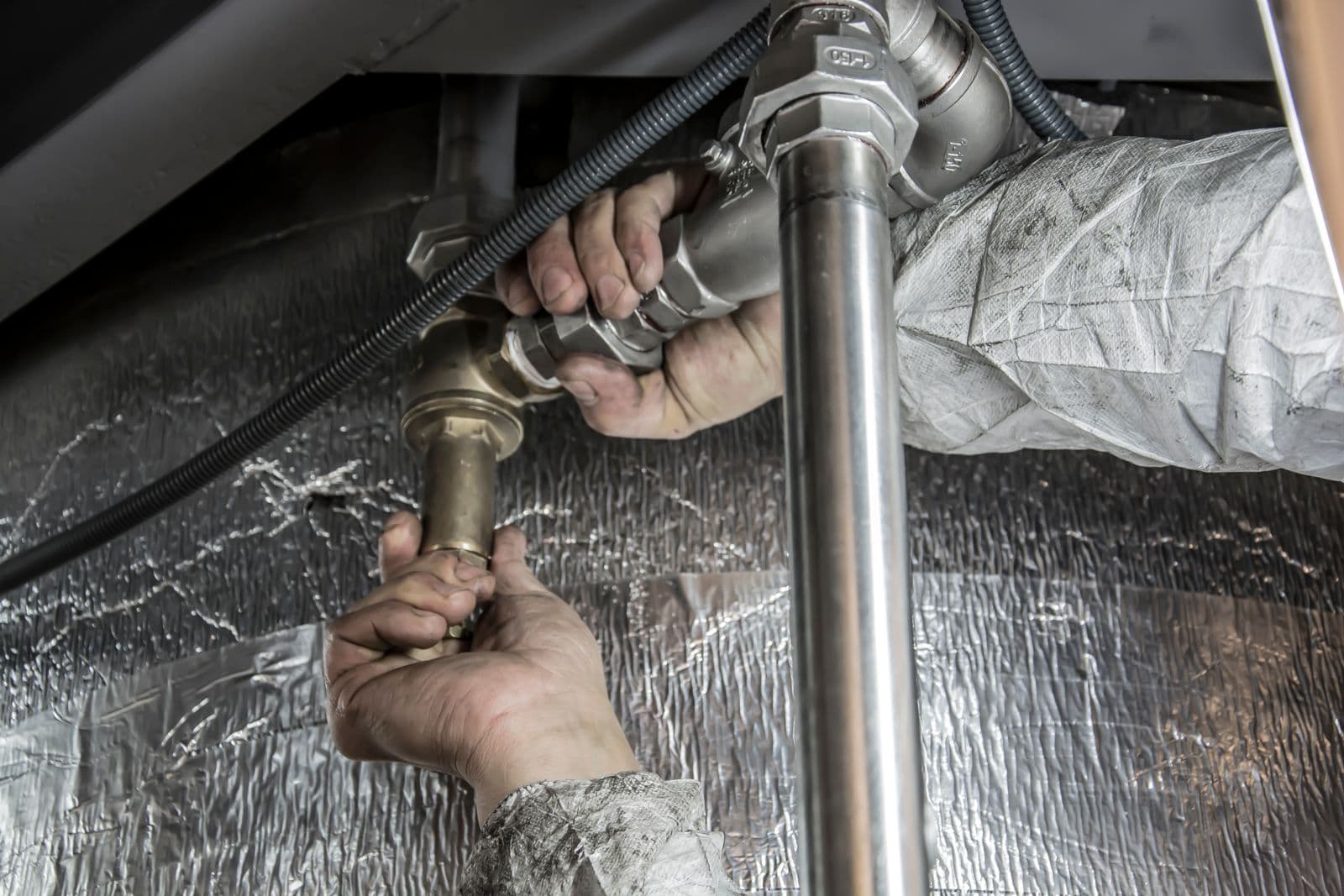
Scale builds on the little rubber and brass parts that are supposed to seal. Toilet flappers stiffen and stop sealing, which is why a toilet starts running on its own. Fill valves get gritty and either run forever or refuse to shut. Angle stops, the small shutoff valves under every sink and toilet, seize in place so that when you finally need to close one it will not turn.
That last one matters more than it sounds. An angle stop is what lets you stop a leaking toilet without shutting off the whole house. In a 20-year-old Valley home with original stops, there is a good chance most of them are frozen.
You feel it in the shower too. Weak flow that crept up on you is usually a scaled shower head or aerator, not a pressure problem. Soak the part in vinegar overnight. That often fixes it for free.
Your appliances pay too. Dishwashers and washing machines heat their own water, so they scale up the same way a water heater does. Hard water is also why dishes come out spotted and why you keep reaching for more detergent. Soap has to bind up the minerals before it can clean anything.
None of this is dramatic. That is the problem with hard water. It never breaks one big thing, it just takes a few years off everything at once, and the bill shows up as a string of small repairs.
What actually helps, and what does not
Softeners get argued about a lot. Here is our read after years of pulling scaled parts out of Valley houses.
Worth the money:
- A salt-based softener. It pulls the calcium and magnesium out instead of just changing them, and it is the one option that reliably stops scale. On hard well water in Queen Creek, it is close to a must.
- A yearly water heater flush, softener or not. Ten minutes of work.
- Hooking up the softener loop your builder stubbed into the garage and left. A lot of newer East Valley homes have one sitting unused.
Be more careful with:
- Salt-free conditioners. They leave the hardness in and change how the mineral forms so it sticks less. They need no salt and no drain, and some people like them. Just do not expect the soft-water feel or the full scale protection.
- Magnetic and electronic descalers that clamp on the pipe. We have not seen these do anything measurable in water this hard.
One honest catch. Softened water is a little harder on old pipe, so in a house still running original galvanized steel it can pull pinhole leaks forward. That is not a reason to skip it. It is a reason to know what your pipe is first.
The order we would do it in
Starting from nothing? Flush the water heater this weekend. Then go find its age on the label. Past 10 years in this water it is on borrowed time, and a planned swap beats a flooded garage.
After that, price a softener. It is the one purchase that protects the heater, the fixtures, and the valves at the same time, and in a house you plan to keep it pays for itself.
Not sure what you are working with? We will look at your heater, your supply pipe, and your softener loop, and tell you which of these is actually worth doing at your house.